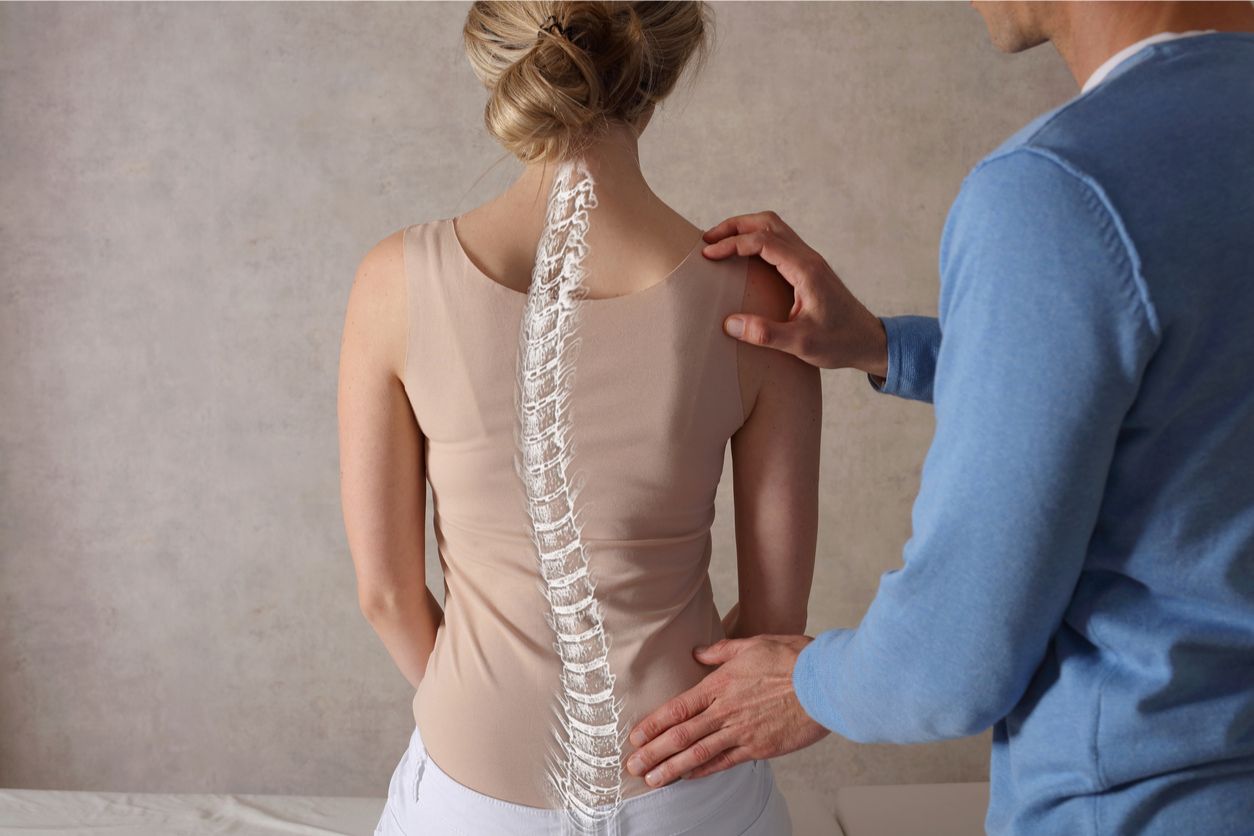
Back pain is one of the most common health complaints in the United States, but for adults living with scoliosis, that pain often has a more complicated explanation. Many people don’t realize their chronic back discomfort may be tied to a combination of scoliosis and arthritis, two conditions that can develop alongside each other and make each other worse over time.
Understanding the relationship between scoliosis and arthritis isn’t just medically interesting. It’s practically important. Knowing how these conditions interact can help you recognize symptoms earlier, ask better questions at your next appointment, and make more confident decisions about treatment.
How Scoliosis Puts Stress on Your Joints
The spine is designed to carry weight evenly. When scoliosis causes the spine to curve abnormally to one side, that balance breaks down. Over time, the uneven load placed on the vertebrae, discs, and surrounding joints creates conditions that make arthritis more likely to develop or progress.
The Mechanical Stress Factor
When the spine curves, some joints bear significantly more pressure than others. This uneven distribution of stress wears down cartilage in spinal facet joints faster on the compressed side, which is exactly how osteoarthritis begins. The most severe wear tends to appear at the vertebrae that are most out of alignment, following the curve’s pattern.
This is particularly relevant for adults who were diagnosed with scoliosis as teenagers but never pursued treatment. Years of compensating for an unbalanced spine quietly accumulate, and by the time pain becomes noticeable, meaningful joint degeneration has often already occurred.
How Curves Progress Into Adulthood
Scoliosis doesn’t always stop progressing when a person stops growing. Curves that measured 30 degrees or more at skeletal maturity have a documented tendency to continue worsening at roughly one degree per year. As the curve increases, so does mechanical stress on the facet joints, the small paired joints at the back of each vertebra that guide spinal motion. Facet joint degeneration is one of the most common complications in adults with progressive scoliosis, and it often develops hand in hand with narrowing of the spaces through which spinal nerves travel.
The Types of Arthritis Most Commonly Linked to Scoliosis
Not all arthritis is the same, and the type most closely associated with scoliosis depends largely on the underlying cause. Two forms are most relevant: osteoarthritis, which develops from mechanical wear, and inflammatory arthritis, which involves an immune system response.
Osteoarthritis and Spinal Degeneration
Osteoarthritis is the most common form of arthritis overall, and in people with scoliosis, this process is accelerated by the chronic stress placed on misaligned joints. As the discs between vertebrae dehydrate and flatten over time, the spaces between vertebrae narrow. This narrowing can compress the nerves that travel through the spinal canal into the legs, a condition known as spinal stenosis. Spinal stenosis is one of the most common reasons adults with scoliosis eventually consider surgery, particularly when conservative treatments stop providing adequate relief.
The cycle of degeneration can become self-reinforcing. As the discs flatten and the joints deteriorate, the spine becomes less stable, the curve may worsen, and arthritis may progress. Breaking that cycle requires accurate diagnosis and a treatment plan that addresses both conditions together, rather than treating each one in isolation.
Inflammatory Arthritis and the Spine
Not all arthritis in patients with scoliosis is caused by wear and tear. Ankylosing spondylitis, a chronic inflammatory condition that primarily targets the spine and sacroiliac joints, can independently alter spinal alignment and, in some cases, contribute to secondary scoliosis. It causes the vertebrae to gradually fuse, which changes how the spine bears weight and moves, sometimes producing or worsening curvature.
If your back stiffness is worse in the morning and improves with movement, or if you experience fatigue or inflammation in other joints alongside your back pain, inflammatory arthritis may be worth discussing with your doctor. The treatment for inflammatory arthritis differs markedly from that for osteoarthritis, and getting the distinction right is essential for effective care.
Recognizing the Symptoms
Scoliosis and arthritis share several overlapping symptoms, which is part of what makes the combination easy to miss or misattribute. A pattern of complaints, rather than any single symptom, is usually what prompts a closer look.
Warning Signs to Watch For
The following symptoms may suggest that scoliosis-related arthritis is developing or progressing:
- Persistent back pain that worsens after prolonged sitting, standing, or walking
- Morning stiffness that gradually improves with movement throughout the day
- Pain that radiates into the buttocks, thighs, or calves
- Noticeable changes in posture or difficulty standing fully upright
- A visible or measurable change in spinal curvature compared to prior imaging
- Loss of height over time, which can indicate spinal compression
Any of these symptoms warrants evaluation, particularly if you have a known diagnosis of scoliosis. As discussed in our article on scoliosis and back pain, back discomfort in adults with spinal curvature often signals more than simple muscle fatigue.
Getting an Accurate Diagnosis
A thorough evaluation goes beyond a standard X-ray. Standing full-spine imaging captures how the spine behaves under the body’s weight, which is the most clinically relevant view for assessing both curvature and joint health. When nerve symptoms are present, MRI can identify exactly where compression is occurring and how severe it is. This complete diagnostic picture is what allows a specialist to design a treatment plan that addresses both the curvature and the arthritis, rather than managing each condition in isolation.
Treatment Options for Scoliosis and Arthritis Together
Managing scoliosis and arthritis simultaneously requires a coordinated approach that addresses both the structural problem and the pain it causes. For most patients, treatment begins conservatively and advances based on how symptoms respond.
Conservative Approaches That Work
For adults with mild to moderate curves and manageable symptoms, non-surgical treatment can provide meaningful, sustained relief. A structured plan generally follows these steps:
- Physical therapy focused on core strengthening and spinal flexibility to reduce mechanical stress on arthritic joints
- Anti-inflammatory medications or epidural steroid injections to manage nerve-related pain and reduce joint inflammation
- Lifestyle modifications, including maintaining a healthy weight, practicing proper posture habits, and pacing daily activities to minimize flare-ups
- Regular monitoring through periodic imaging to track curve progression and catch changes before they become harder to manage
Conservative treatment is most effective when initiated before significant joint degeneration occurs, underscoring the importance of early evaluation.
When Surgical Treatment Makes Sense
When conservative approaches no longer provide adequate relief, or when nerve compression is causing significant neurological symptoms, surgery may offer the most durable solution. Modern techniques for adult scoliosis correction can address both the curvature and arthritis in a single procedure, relieving nerve compression, restoring spinal alignment, and stabilizing joints that have been progressively damaged. The decision to pursue surgery is personal and should be made with a spine specialist who understands the full picture of your curve, your symptoms, and your long-term goals.
If you have a history of scoliosis and back pain that has been gradually worsening, or if you’ve never been formally evaluated but recognize the symptoms described here, a consultation is the right starting point. The earlier both conditions are identified and addressed, the more treatment options remain available to you.
Located in Tampa, Florida, Scoliosis Care serves patients throughout the Tampa Bay region, including Tampa, St. Petersburg, Clearwater, Brandon, Wesley Chapel, and surrounding communities. Dr. Siambanes provides comprehensive evaluation and treatment for all types of scoliosis in both children and adults. Contact us to schedule a consultation and find out what’s driving your pain and what can be done about it.