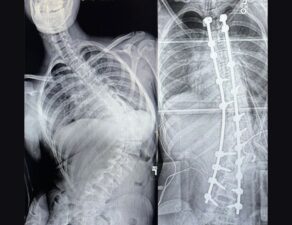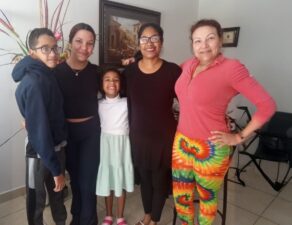

For more than twenty years, Tiffany lived with a verdict she never quite accepted: your scoliosis is untreatable. Doctor after doctor reviewed her case and stepped back. Too risky, they said. Too complicated. One wrong move and you could be paralyzed. So Tiffany did what she had to do; she adapted. She learned to manage the flare-ups, took Tylenol when the pain peaked, and quietly accepted that this was just her life.
Then she had a baby, and a nurse in a hospital recovery room changed everything.
Twenty Years of Being Told No
Tiffany was diagnosed with scoliosis as a child. In those early years, she tried everything available: shock therapy, chiropractic care, massages, and physical therapy. Anything that might help, she pursued it. When nothing worked well enough, and the medical consensus was that the curve wasn’t severe enough to warrant surgery, she shelved the conversation.
But the curve progressed. What had been manageable pain gradually became something else entirely.
“Every doctor that I’ve ever been to, nobody would touch me,” she says. “Everybody was too afraid. I would either get paralyzed, or they couldn’t do anything.”
So she kept going. She worked, she lived her life, and she absorbed the pain the way people do when they have no other option. On her worst days – and there were bad days – she ended up in the hospital because walking had become impossible. “If I were to take a step,” she recalls, “it would feel like my body is falling apart and I’m dying.”
She was hospitalized a handful of times over those two decades, though there were stretches she didn’t go; she simply endured it at home. Her private coping ritual, the one she almost doesn’t say out loud, was sitting on the shower floor under scalding water and crying.
“I’m always going to have pain no matter what,” she had come to believe. “It is what it is.”
A Nurse’s Recommendation That Changed Everything
When Tiffany gave birth to her daughter, a nurse at the hospital mentioned a name she hadn’t heard before: Dr. Siambanes. He specialized in scoliosis in both children and adults – and had a reputation for taking on difficult cases.
Tiffany and her husband looked him up. They were cautiously interested, but she had been down this road before. Hope was a luxury she’d learned to be careful with.
A few weeks later, she ended up back in the hospital, and the pain had again made it impossible to walk. That morning, before she was even discharged, her husband called to schedule a consultation.
“We called that day,” she says, “and made an appointment to see him, to see what he thought.”
A Doctor Who Said He Could Help
Within a couple of weeks, Tiffany sat across from Dr. Siambanes. He reviewed her imaging, listened to her history, and told her something no one had in twenty-two years: he believed he could help. Not fix it entirely, he was honest about that. Her scoliosis would always be part of her life. But he thought surgery could meaningfully reduce her pain.
That measured honesty is part of what made her trust him. He wasn’t promising a miracle. He was offering a real possibility, backed by experience.
About six weeks after that appointment, Tiffany had surgery.
Waking Up on the Other Side
She was in the hospital for two and a half days. The morning after surgery, she was on her feet.
Recovery required help; her husband took leave for the first month because Tiffany wasn’t cleared to lift her daughter or do much on her own. She learned to bend a certain way, move a certain way, and pace herself. But the pain that had defined her daily existence for over two decades? It was quieter. Then quieter still. Then, in ways she still found hard to fully trust, it was largely gone.
“It was the best decision I think I’ve ever made in my whole entire life,” she says. Then she laughs a little. “I’m waiting for the other shoe to drop. Because I’m so used to the pain that it’s like – it’s gone.”
Her mother noticed first. They went for a walk together a few weeks after surgery, and her mom fell in step behind her.
“You’re not limping anymore,” she said.
Tiffany hadn’t fully registered that she’d walked with a limp for years. It had simply become how she moved. Hearing it said out loud, in the past tense, stopped her.
The Life She’s Planning Now
Tiffany’s daughter is almost one year old. She and her husband are expecting another baby. And when Tiffany talks about what she’s looking forward to on the other side of her next chapter, the list doesn’t sound like the goals of someone who spent two decades being told to manage and cope. It sounds like someone who just got their life back.
“I want to do a triathlon,” she says. “I want to go hiking. We can go to the mountains, we can go to Tullulah Falls in Georgia, and I can actually do it and not be dying in pain.”
At her first post-op appointment with Dr. Siambanes, her progress surprised even him. He was pleased with how well she was doing.
What Tiffany Wants Other Patients to Know
For anyone sitting where Tiffany sat two years ago – living with chronic spinal pain, dismissed by doctors, wondering if surgery could actually be worth it – she doesn’t hedge her answer.
“For me, it was 100% worth it,” she says. “For anybody else that’s in pain like I’ve been, and they’re questioning whether they should or should not do it, they really should make sure they find the right person as we did. I’m either gonna stay the same, or I’m gonna get better. So why not try it? Why not try to better my life, especially for my daughter?”
That’s the thing about living with pain for so long: you stop imagining that it could be different. Tiffany’s story is a reminder that sometimes the difference is simply finding the right physician willing to take the case seriously.
Located in Tampa, Florida, Scoliosis Care serves patients throughout the Tampa Bay region, including Tampa, St. Petersburg, Clearwater, Brandon, Wesley Chapel, and surrounding communities. Dr. Siambanes provides comprehensive evaluation and treatment for all types of scoliosis in both children and adults. If you’ve been told your case is too complex or too risky, a second opinion with a specialist can change the conversation. Contact us to schedule a consultation.