Many adults picture scoliosis as a condition that only affects teenagers during growth spurts. A different form of the condition develops much later in life, often after age 50, as the spine slowly wears down from decades of use. This type, known as degenerative scoliosis, tends to catch people off guard because it appears without any childhood history of spinal curvature.
If you have noticed new back pain that seems to come out of nowhere, or if a routine X-ray revealed an unexpected curve in your spine, understanding degenerative scoliosis can help you make sense of what is happening. The condition is far more common than most people realize, and knowing the causes, symptoms, and available treatment options gives you a clearer picture of how to manage it going forward.
What Is Degenerative Scoliosis?
Degenerative scoliosis, sometimes called de novo scoliosis, is a sideways curvature of the spine that develops in adulthood as the discs and joints between the vertebrae break down. Unlike the scoliosis diagnosed in teenagers, this form has nothing to do with growth. Research published through the National Institutes of Health found that 68 percent of adults over 60 show some degree of spinal curvature linked to this process, making it one of the most common spine conditions among older adults.
How It Differs from Adolescent Scoliosis
Adolescent scoliosis usually develops during rapid growth and often causes no pain, which is why it is frequently detected during school screenings. Degenerative scoliosis works in reverse. It shows up after the spine has finished growing, and pain is often the very first sign that something has changed. The curve itself tends to be smaller than what is seen in teenagers, but the surrounding wear and tear can still cause significant discomfort.
Who Is Most at Risk
Women face a higher risk of degenerative scoliosis than men, largely because bone density naturally declines faster after menopause. Age is the single biggest factor, with risk climbing steadily after 50 and continuing to rise through the senior years. People who already have osteoporosis, prior spine surgery, or long-standing disc problems tend to see the condition progress more quickly than those without these added risk factors.
What Causes Degenerative Scoliosis?
The spine relies on healthy discs and joints to stay balanced and aligned. When those structures begin to wear unevenly, the spine can gradually shift out of its normal position, which is the root of nearly every case of degenerative scoliosis.
Disc and Joint Breakdown Over Time
Spinal discs act as cushions between the vertebrae, and they naturally lose water content and height as people age. When one side of a disc degenerates faster than the other, it creates an uneven space that pulls the spine sideways. Facet joints, the small joints that connect each vertebra to the next, can wear down in a similar uneven pattern, contributing to the imbalance and allowing the curve to develop slowly over many years.
Bone Density Loss and Other Contributing Factors
Osteoporosis weakens the vertebrae themselves, making them more likely to compress unevenly under normal daily pressure. Previous spine surgery, untreated scoliosis in adolescence, and generalized muscle weakness around the spine can all accelerate the process. Genetics also plays a role, since some adults develop scoliosis even without these additional risk factors.
Signs and Symptoms to Watch For
Because degenerative scoliosis develops slowly, many people mistake the early symptoms for ordinary aches that come with getting older. Recognizing the specific pattern of symptoms can help you know when it is time to seek an evaluation.
Physical Symptoms
The most common complaints include a dull ache in the lower back that worsens with standing or walking, along with visible changes in posture that family members often notice before the patient does. Some people also develop back pain from scoliosis that radiates into the hips or legs as the curve begins to affect nearby nerves.
When Symptoms Signal Something More Serious
Certain symptoms deserve prompt medical attention rather than a wait-and-see approach. These include the following:
- Persistent back pain that does not improve with rest or over-the-counter medication
- Numbness, tingling, or weakness that spreads into the legs
- A noticeable loss of height or a visible increase in spinal curvature
- Difficulty standing fully upright or walking for more than a few minutes at a time
- Loss of bladder or bowel control, which requires immediate evaluation
Any one of these signs points to a curve that may be progressing and affecting the nerves around the spine, so getting evaluated quickly gives you more treatment options down the road.
How Degenerative Scoliosis Is Diagnosed
An accurate diagnosis requires more than a quick look at your posture. A thorough evaluation combines a hands-on exam with imaging that shows exactly how the spine has changed over time.
Physical Examination and Imaging
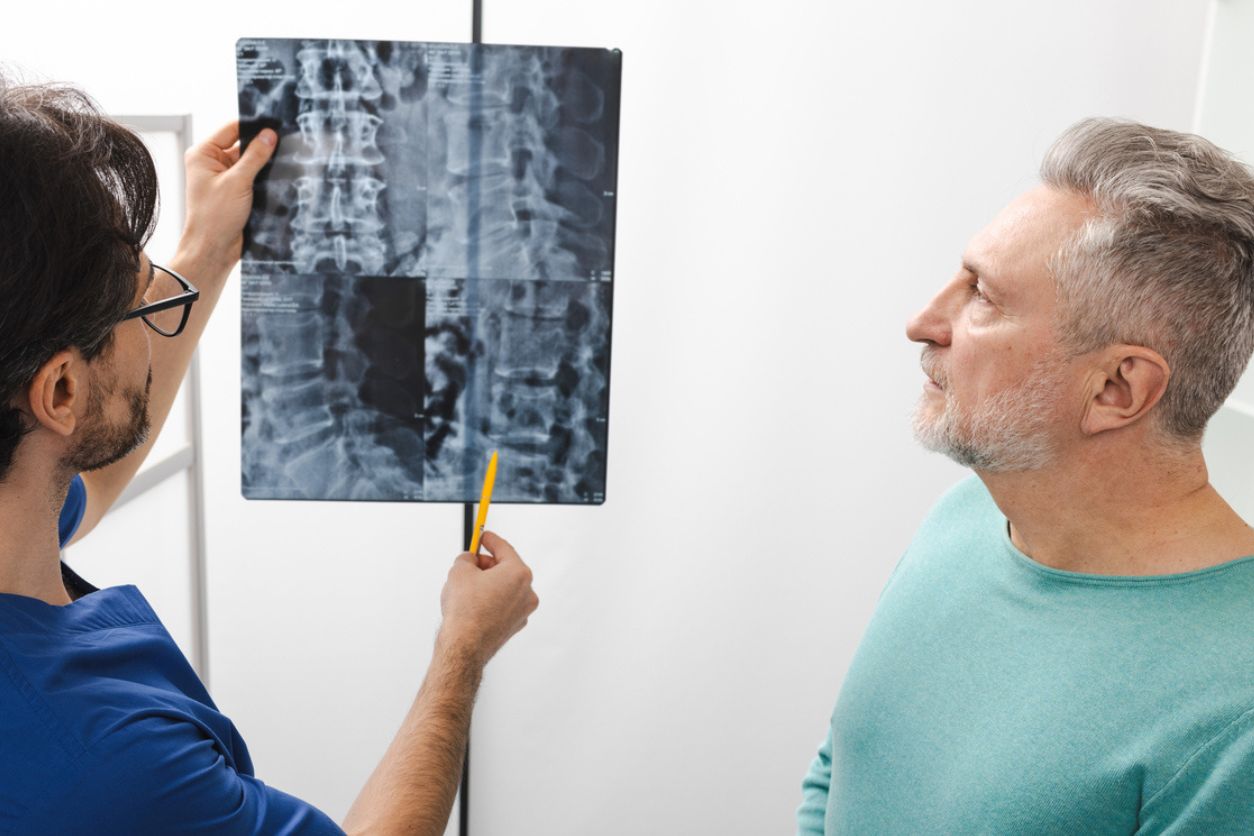
A spine specialist starts with a physical exam that assesses posture, balance, and range of motion, followed by standing X-rays that measure the exact degree of the curve using the Cobb angle. These images also reveal how much disc height has been lost and whether the vertebrae have started to shift out of alignment.
What Doctors Look For in a Workup
When patients report leg pain, numbness, or weakness, an MRI helps identify whether the curve is compressing nerves or narrowing the spinal canal, a condition called spinal stenosis. Bone density testing is often added for older patients, since low bone density can influence which treatments are safest and most effective.
Treatment Options for Degenerative Scoliosis
Treatment is not one-size-fits-all. The right approach depends on the severity of the curve, the intensity of symptoms, and each patient’s overall health and daily activity goals.
Conservative Management Approaches
Most patients start with non-surgical care, since it can relieve pain and slow progression without the recovery time that comes with surgery. A typical plan may include:
- Physical therapy focused on core strengthening and improving flexibility around the spine
- Anti-inflammatory medication or targeted epidural injections for nerve-related pain
- Activity modifications, such as pacing daily tasks and using proper lifting techniques
- Weight management to reduce mechanical stress on the spine
- Regular imaging to track whether the curve is stable or continuing to progress
When Surgery Becomes Necessary
Surgery becomes a reasonable option when conservative treatment no longer controls pain, when nerve compression causes ongoing weakness or numbness, or when the curve continues to worsen despite other interventions. Depending on the specific problem, treatment options for adult scoliosis may include decompression to relieve nerve pressure or spinal fusion to stabilize the curve and restore better alignment.
Expert Care for Degenerative Scoliosis in Tampa Bay
Living with degenerative scoliosis does not mean accepting pain as a permanent part of daily life. With the right evaluation and a treatment plan tailored to your specific curve, most patients find meaningful relief and regain the ability to stay active.
Located in Tampa, Florida, Scoliosis Care serves adults throughout the Tampa Bay region, including Tampa, St. Petersburg, Clearwater, Brandon, and Wesley Chapel. Dr. Siambanes provides comprehensive evaluation and treatment for degenerative scoliosis, from conservative care through advanced surgical options. Contact us today to schedule a consultation and take the next step toward a more comfortable, active life.